
On January 5, 2026, from 2:00 to 3:00 PM, the Department of Accounting, Faculty of Business and Management successfully hosted an insightful guest lecture titled “Manufacturing Consent: How Rhetorical Nationalism Increases Excess Overtime in China” in T1-302-R1. The lecture was delivered by Dr. Feng Chen from the University of Toronto and attracted a large number of enthusiastic faculty members and students.
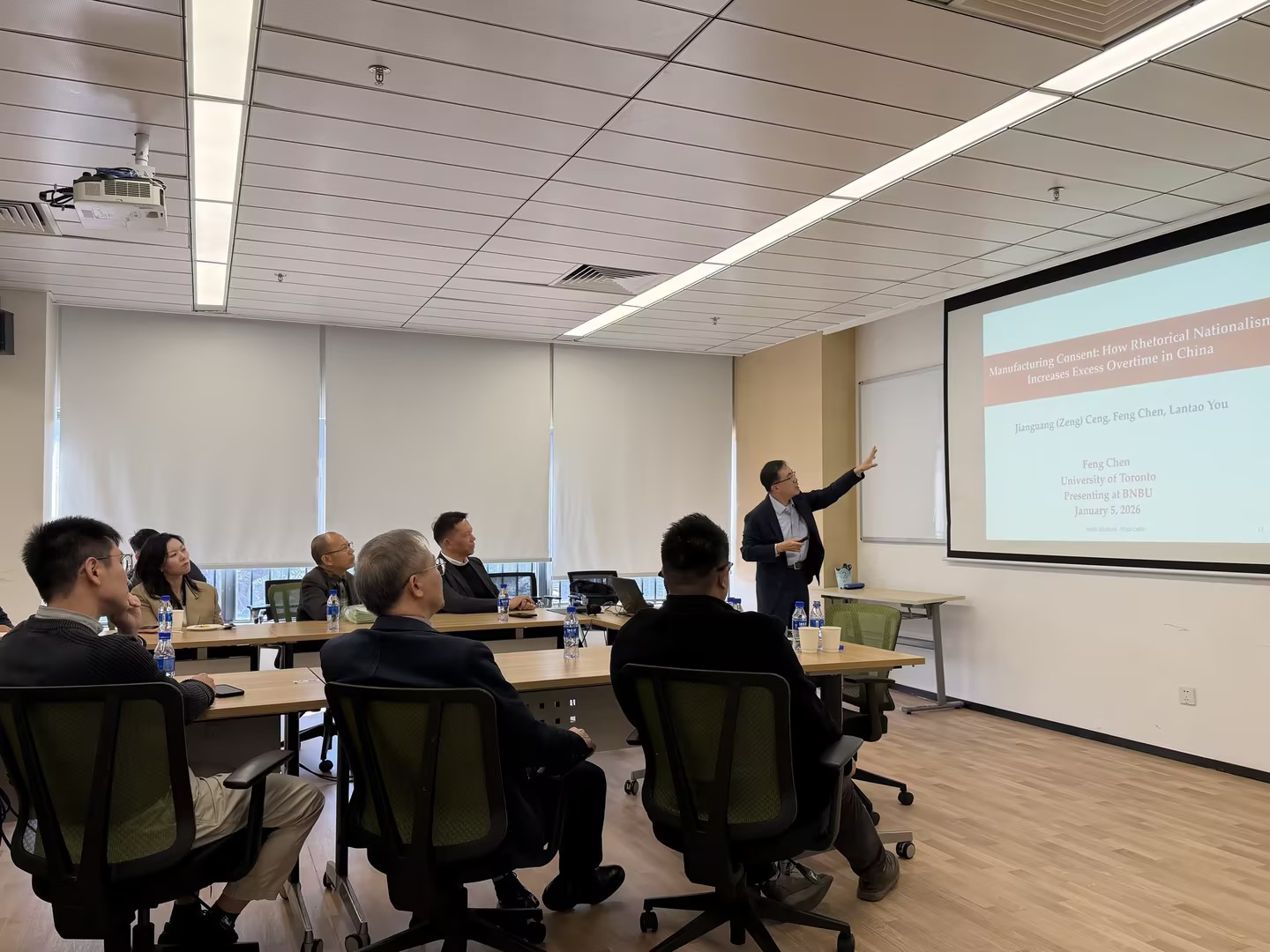
Dr. Feng Chen shared his latest research findings in the lecture, exploring how rhetorical nationalism affects employee behavior in firms, particularly in relation to overtime. The study focuses on three core questions: First, do firms with stronger nationalist rhetoric exhibit significantly higher levels of excess overtime? Second, does nationalist rhetoric intensify horizontal peer competition among employees while reducing vertical conflict? Third, who is most susceptible to ideological control?
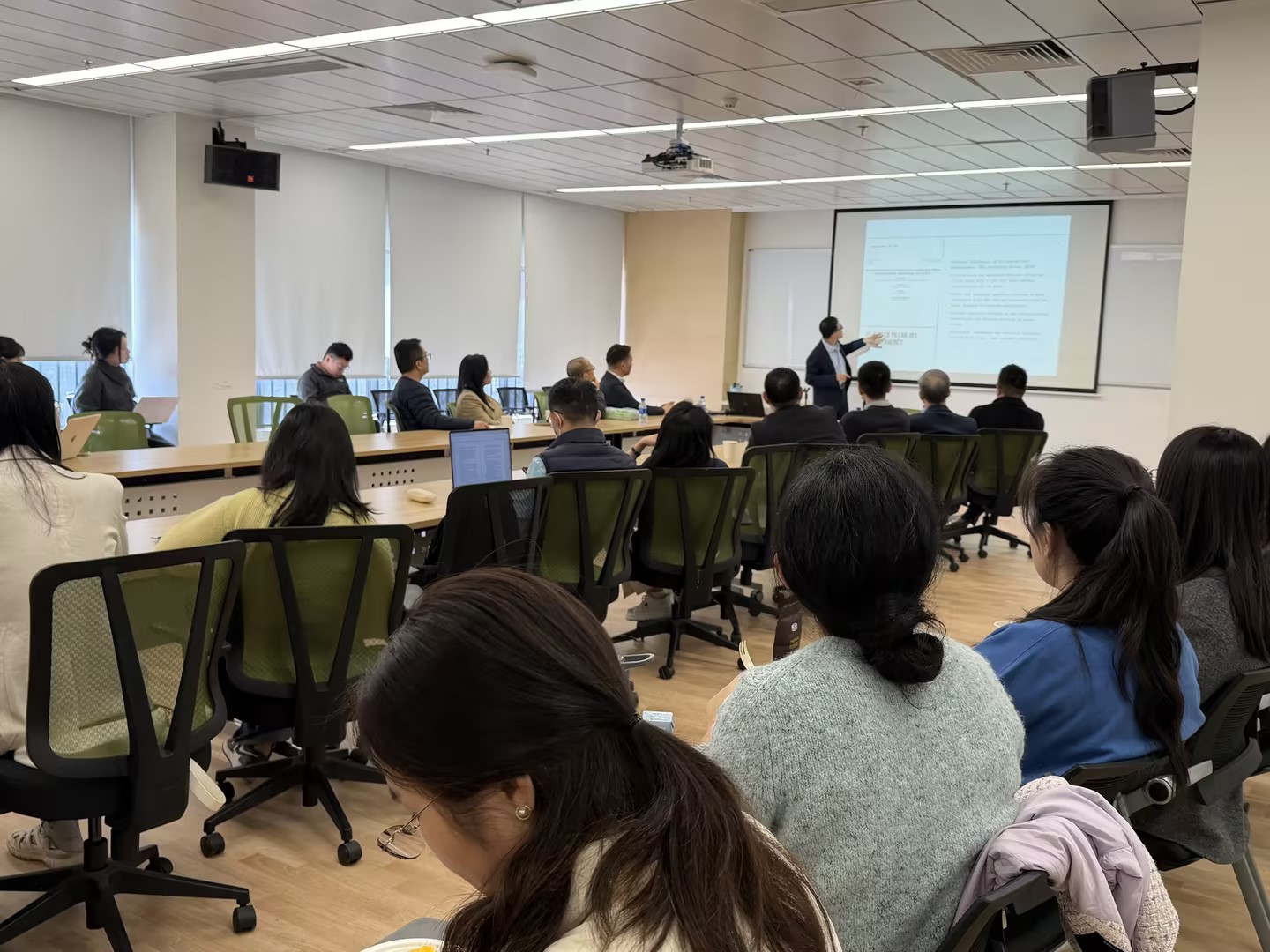
Dr. Feng Chen's research demonstrates that rhetorical nationalism significantly increases excessive overtime among employees. Employees in firms with stronger nationalist rhetoric exhibit notably higher levels of overtime compared to those in other firms. This phenomenon can be explained by the mechanisms through which nationalist rhetoric reduces vertical conflicts between employees and management while intensifying horizontal competition among peers, driving employees to work harder and longer hours. Furthermore, the study reveals that vulnerable groups, such as economically disadvantaged employees or those lacking job security, are more susceptible to the effects of rhetorical nationalism, while strong institutional protections can mitigate these impacts. Notably, the robustness of the findings was confirmed through various alternative measures and models, and endogeneity concerns were addressed using instrumental variable (IV) and difference-in-differences (DID) methods, further strengthening the study's credibility.
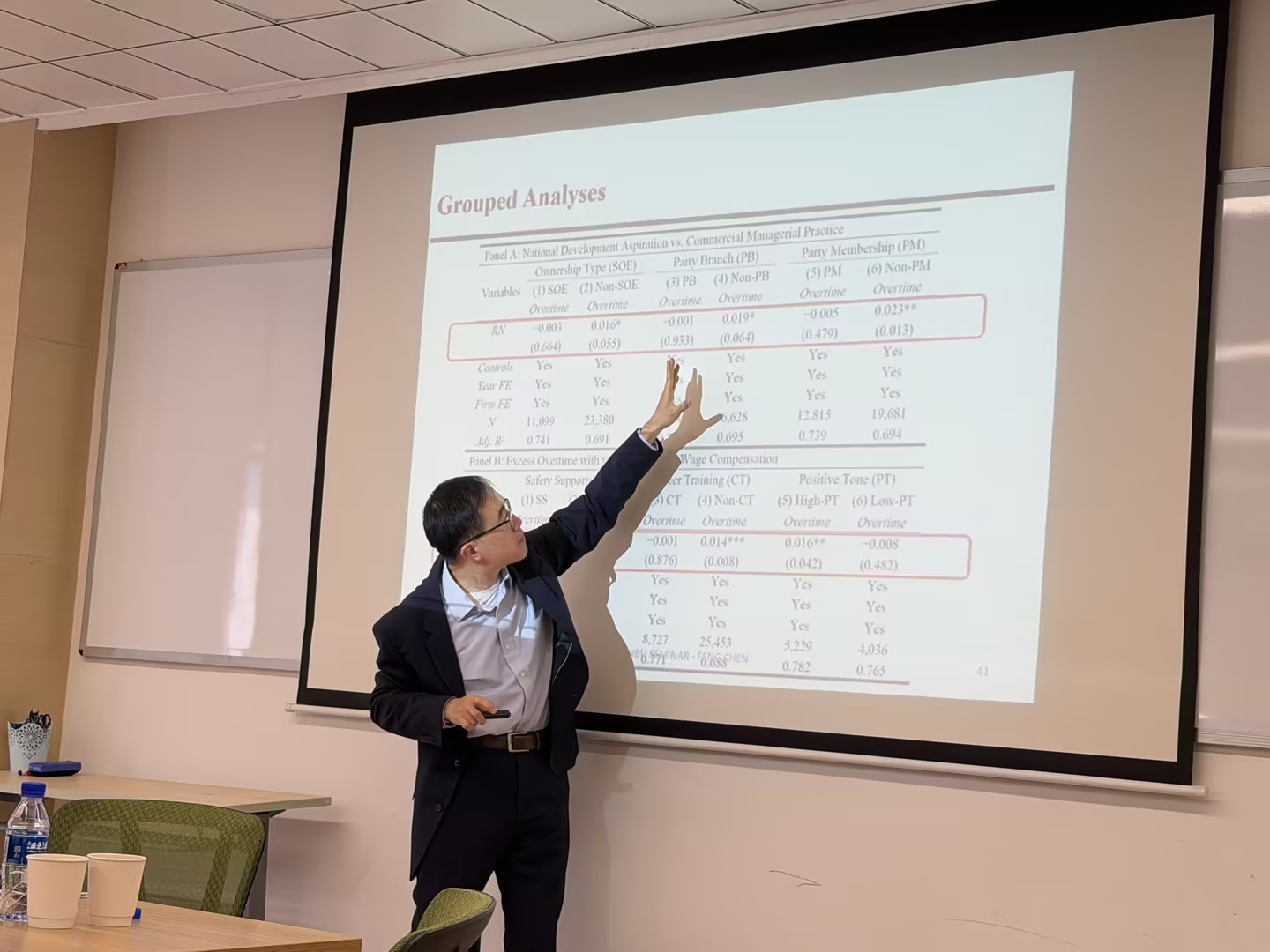
This lecture provided attendees with a fresh perspective on the connection between labor behavior and ideology, shedding light on the dual effects of rhetorical nationalism in corporate management. While nationalist rhetoric may boost short-term productivity, it also raises concerns about employee well-being and labor rights. Dr. Feng Chen emphasized the importance of strengthening institutional protections to mitigate the potential negative impacts of rhetorical nationalism.
The lecture was well-received by the audience, sparking lively discussions and deep reflections. It concluded successfully amid warm applause.
©2024-2025 Beijing Normal-Hong Kong Baptist University(BNBU). All Rights Reserved.粤ICP备07509519号粤公网安备44049102496044.


