Class of 2026 Entrepreneurship and Innovation Graduates: Post‑Graduation Destinations Featuring Record‑High QS30 and QS50 Admission Rates in Six Years
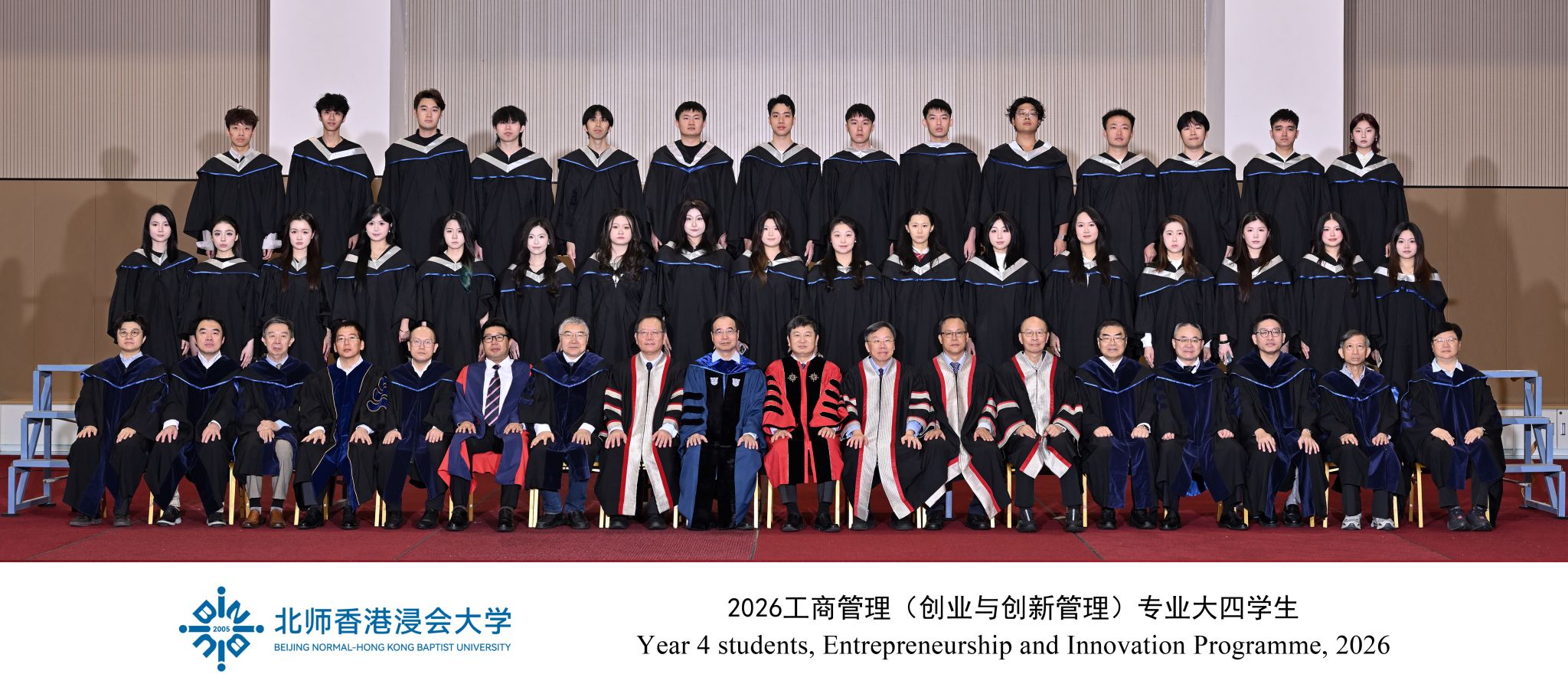
The Class of 2026 in Entrepreneurship and Innovation (EPIN) comprises 39 graduates. As of 13 June 2026, 22 have received offers from prestigious institutions at home and abroad and have chosen to pursue further study, while 13 have entered the workforce, taken up freelance work, or launched their own ventures. The cohort has delivered outstanding results in postgraduate progression, with achievements that are both impressive and worthy of celebration.
Further Study
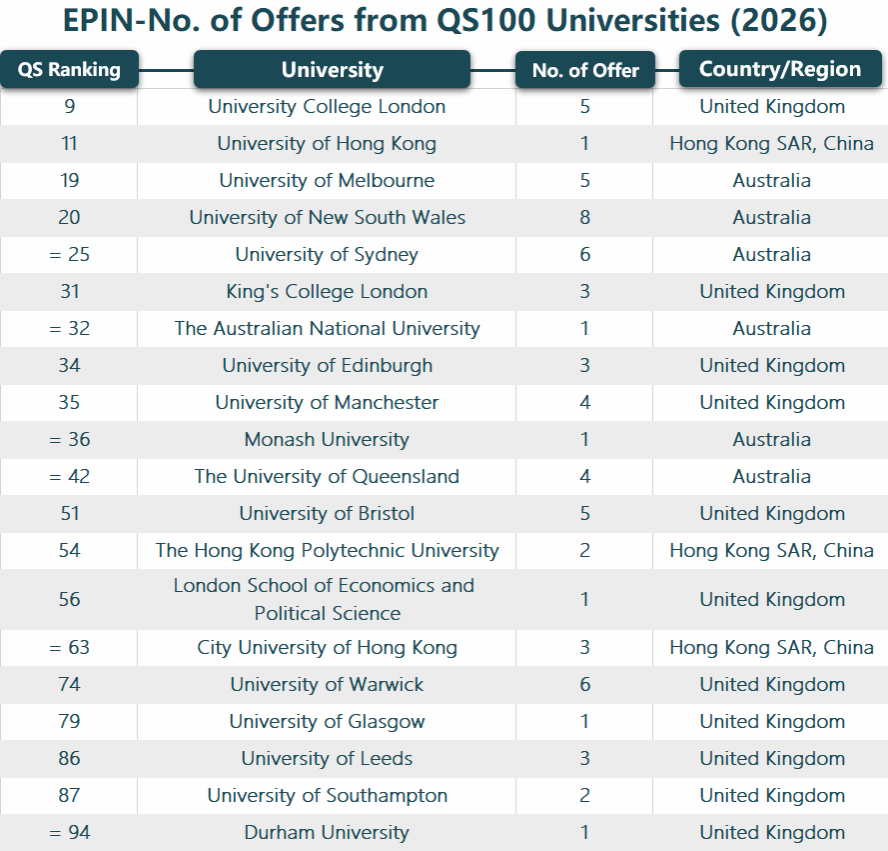
Building on the breakthrough offers secured by the Class of 2025 – which included admissions to world‑leading universities such as Imperial College London and the University of Pennsylvania – the Class of 2026 has raised the bar even further in terms of overall postgraduate quality. This year, the QS top 30 admission rate reached 50%, and the QS top 50 admission rate stood at 64% – both representing the best performance in six years.
The 22 students continuing their education received a total of 76 postgraduate offers, of which 65 came from institutions ranked in the world's top 100 by QS. On average, each student secured nearly three offers from QS top‑100 universities. In addition to continued interest from established partner institutions such as University College London, University of Melbourne, and University of New South Wales, our graduates also received strong offers from London School of Economics and Political Science, Australian National University, and King's College London.
Employment
Among the graduates who have chosen to enter the workforce directly, their employment sectors span environmental protection, foreign trade, real estate, and hospitality. Those pursuing entrepreneurial ventures are primarily focused on e‑commerce, while freelance practitioners are active in emerging fields such as the pet industry and AI‑driven film and television production.
According to a valid survey of EPIN alumni conducted for the 2024–2025 period:
21% of alumni are engaged in industrial or technology entrepreneurship, with ventures covering fast‑moving consumer goods, technology, cross‑border e‑commerce, consulting, and other high‑demand sectors.
37% have joined Fortune Global 500 companies, listed corporations, or public sector organisations – for example, PwC, KPMG, Agricultural Bank of China, Guangzhou Water Investment Group, and municipal Bureaux of Education.
28% hold innovation‑focused roles – such as product innovation, cross‑border e‑commerce innovation, and digital transformation – at well‑known companies including PDD Holdings (TEMU), China Resources Sanjiu Medical & Pharmaceutical, Hikvision, Nanfang Black Sesame Group, and Tianao Aerospace.


