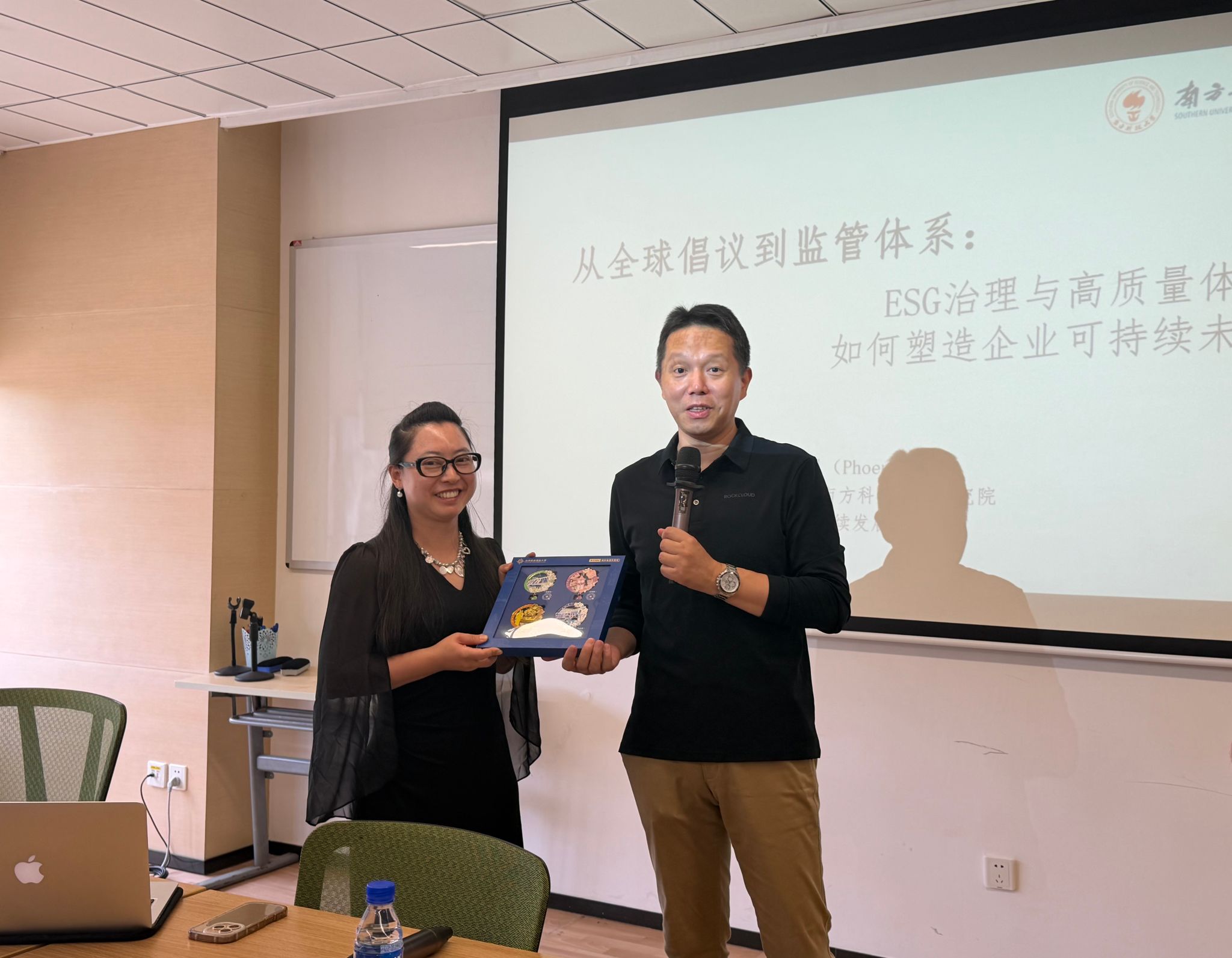
DAcc Guest Lecture | From Global Initiatives to Regulatory Systems: How ESG Governance and High-Quality Systems Are Shaping a Sustainable Future for Businesses
In recent years, global challenges such as climate change and resource scarcity have become increasingly severe, placing sustainable development at the forefront of societal concerns. As a critical framework for driving corporate sustainability, ESG (Environmental, Social, and Governance) has evolved from a global initiative into concrete regulations and practices. On March 25, 2026, the Department of Accounting at the Faculty of Business and Management hosted a guest lecture titled “From Global Initiatives to Regulatory Systems: How ESG Governance and High-Quality Systems Are Shaping a Sustainable Future for Businesses.” The lecture featured Ms. Danfeng Zhang from the ESG Sustainability Development Center of the Southern University of Science and Technology Financial Research Institute and attracted a large audience of faculty and students.
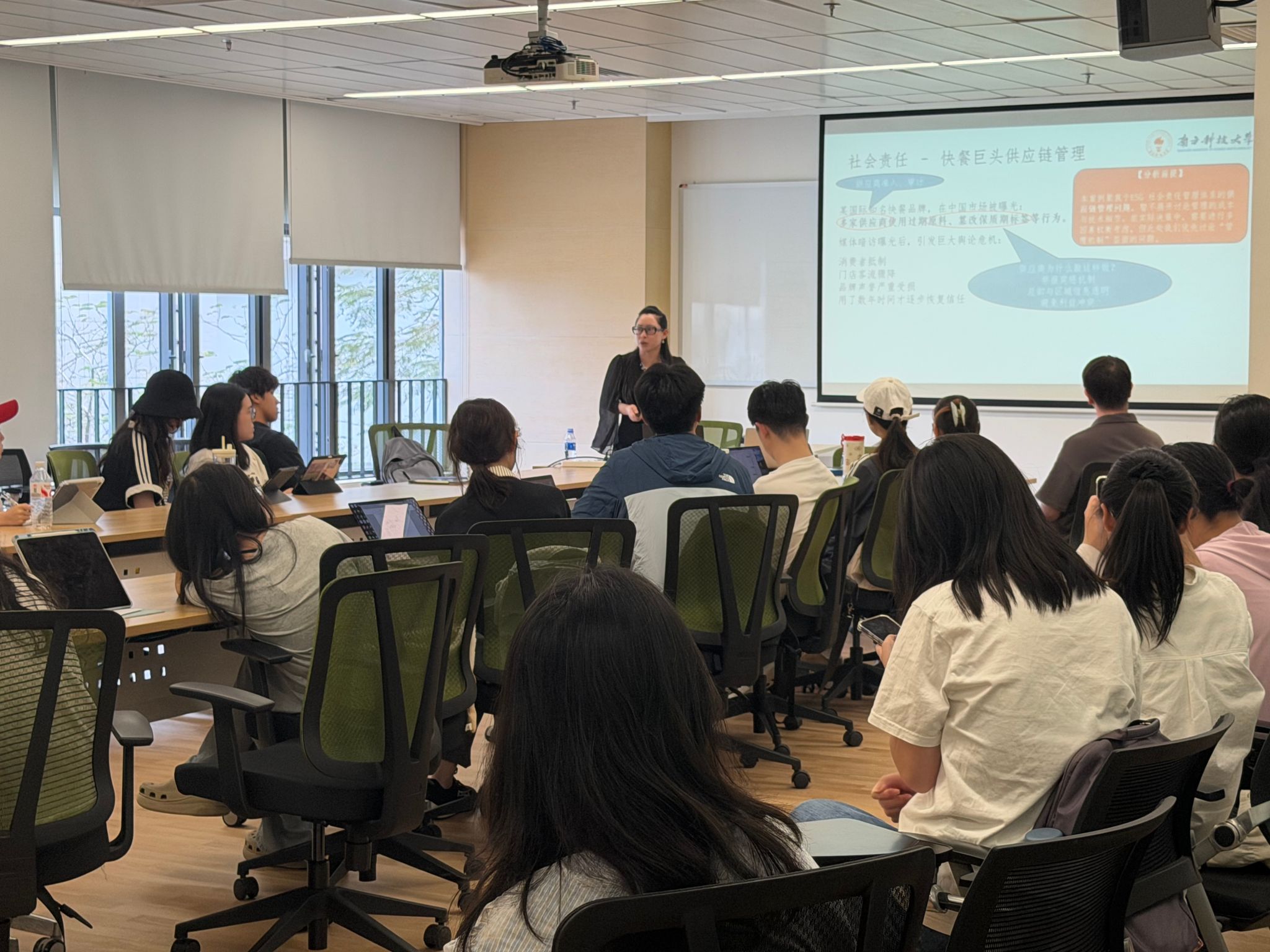
The lecture delved into six key themes, beginning with the trends in green transition and high-quality development. Ms. Zhang analyzed how enterprises can transition from resource-intensive models to green and low-carbon ones under the "dual carbon" goals. Through policy interpretation and case studies, she offered innovative approaches for achieving sustainable and high-quality development. Furthermore, the lecture examined the evolution of ESG from a concept to a global regulatory framework, emphasizing its transformation from voluntary action to mandatory compliance. Ms. Zhang highlighted the need for companies to enhance their competitiveness while ensuring regulatory compliance. Ms. Zhang also shared practical insights into building ESG management systems and restructuring risk management frameworks, exploring ways to strengthen corporate resilience in complex environments. Additionally, the lecture focused on the unique advantages of Hong Kong's green finance sector, analyzing market opportunities and its significance for career development. She also discussed the construction of interdisciplinary sustainable talent models, emphasizing the critical role of cultivating multi-skilled professionals in driving future corporate growth. Lastly, Ms. Zhang shared her profound reflections on long-termism, asserting that ESG is not just a tool for corporate development but a strategic choice to achieve economic, social, and environmental value. Her insights provided valuable practical experiences and innovative directions for the sustainable development of enterprises.
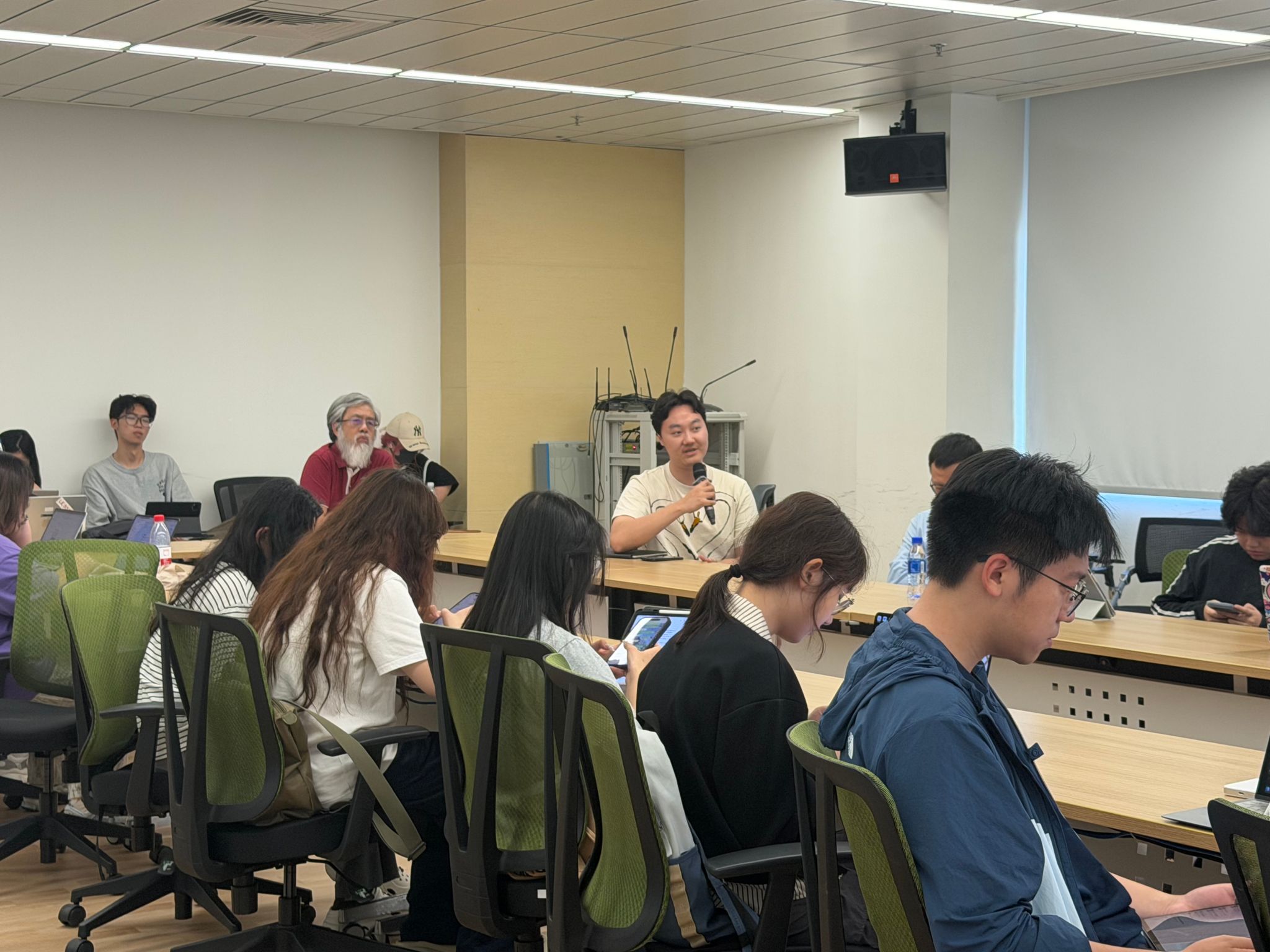
During the interactive session, the audience actively engaged with Ms. Zhang, raising questions and exchanging ideas. The lecture was rich in content and forward-looking in perspective, offering attendees fresh insights into ESG governance and high-quality development. It also provided valuable guidance for enterprises to seize opportunities and address challenges in the wave of green transformation.